Conceptual Design_ 2023 International ADIK Invitational Exhibition “Architecture & Human”
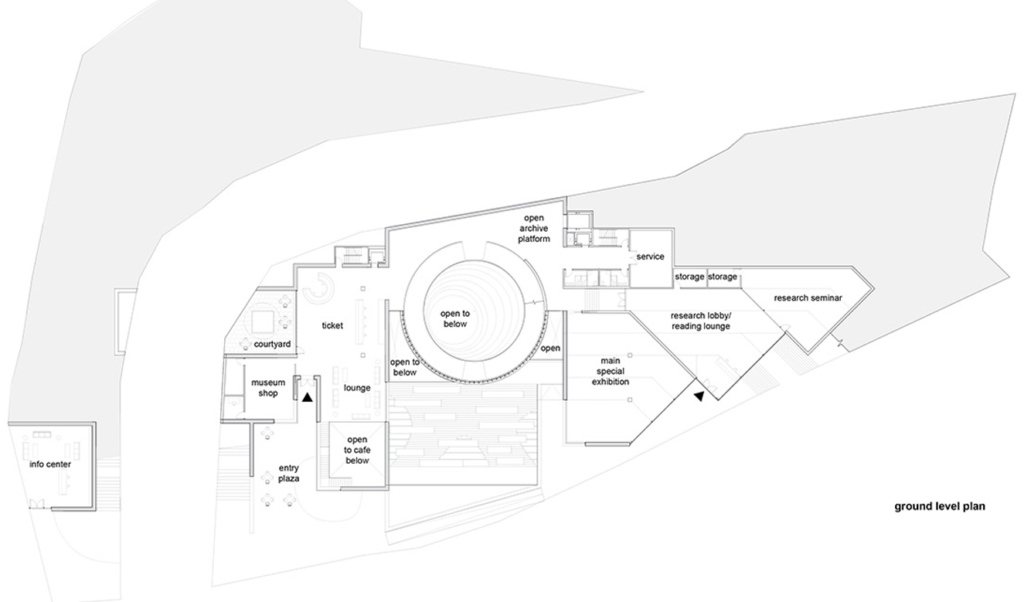
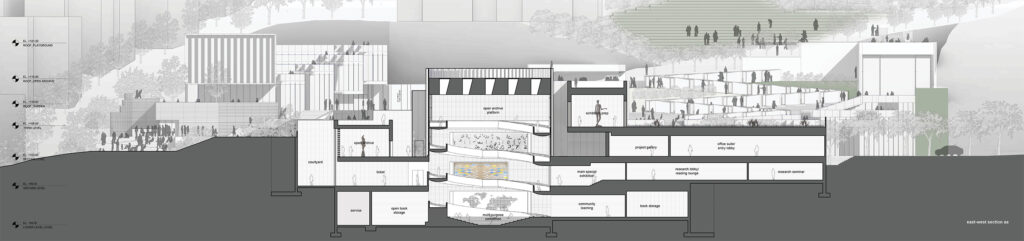
This project is a competition entry for an art complex in Seoul and has been invited to an international exhibition. The proposal strategically employs the “wall” as a primary architectural element to organize and define key programmatic spaces, including indoor and outdoor gallery spaces, archives, multi-purpose areas, administration, a children’s zone, and a community gallery wall.
In addition to these programmatic components, the design introduces two collective gathering spaces—the void and the walled garden—as central social and spatial devices. These spaces are conceived to foster productive collision among artists, academics, researchers, and local residents, encouraging dynamic interaction, exchange, and collaboration within the creative community.
A New Cultural Hub
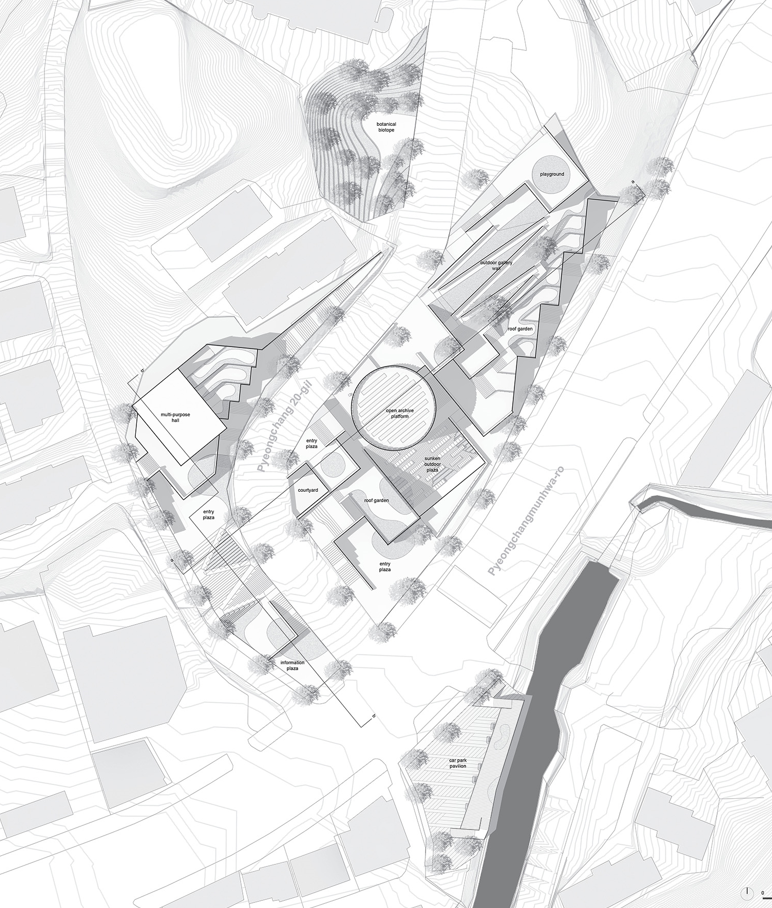
The proposed site offers a singular opportunity to create a new cultural hub and civic icon for Seoul. Strategically positioned at the convergence of residential neighborhoods, scenic hiking trails, and the future promenade to the art campus, the site also commands strong visibility along one of Pyungchang-dong’s most prominent streets. This convergence of urban, cultural, and natural contexts establishes the Art Complex as a highly legible and accessible public destination.
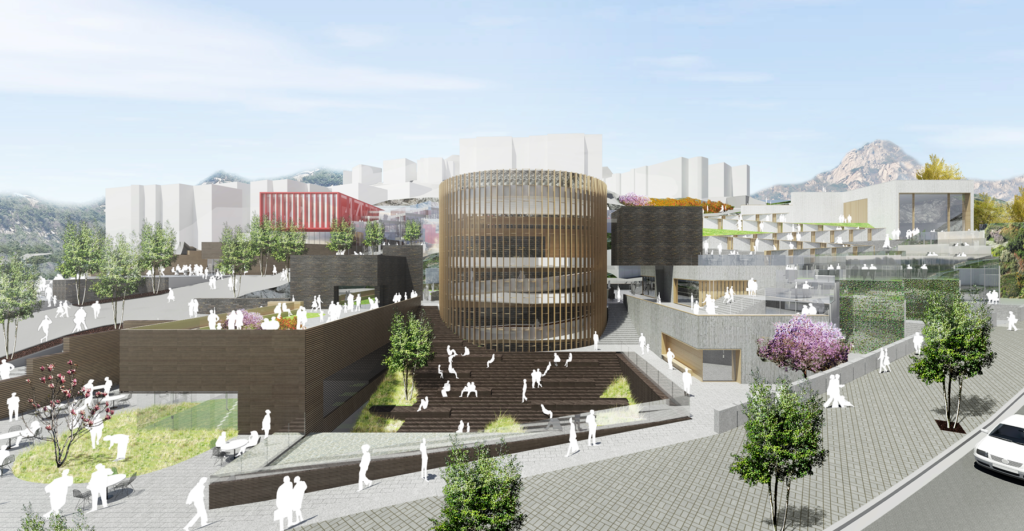
The Commons: Gardened Outdoor Space
Inspired by traditional Korean gardens, the landscape uses linear forms and walls to work with the site’s natural contours. An active plaza at the base of the Open Archive Platform welcomes both visitors and landscape users, accessed from Pyungchang Moonwharo and the hilltop via a grand stair and sunken water feature, establishing a serene arrival into the complex.
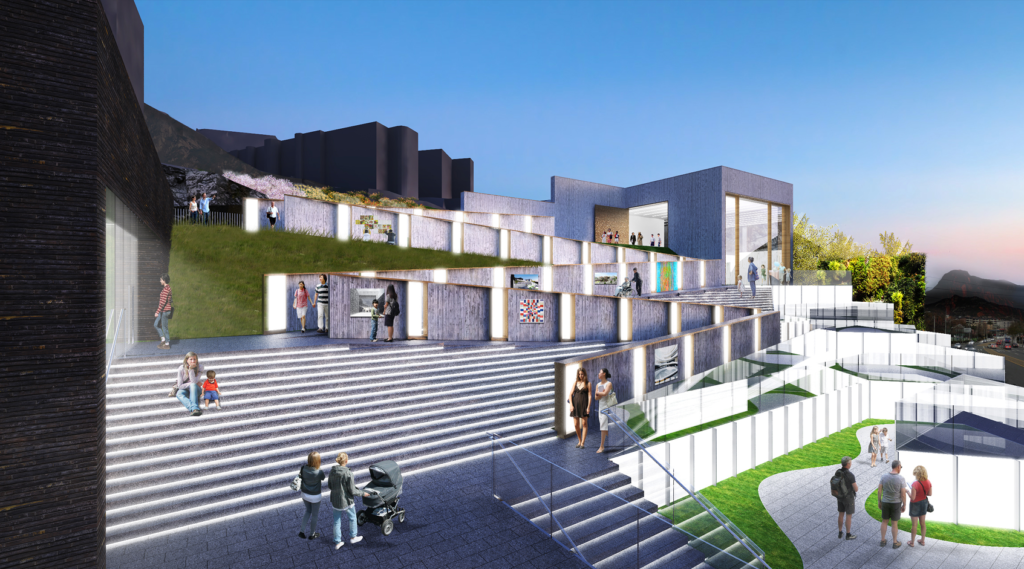
Open Archive Platform (The Void)
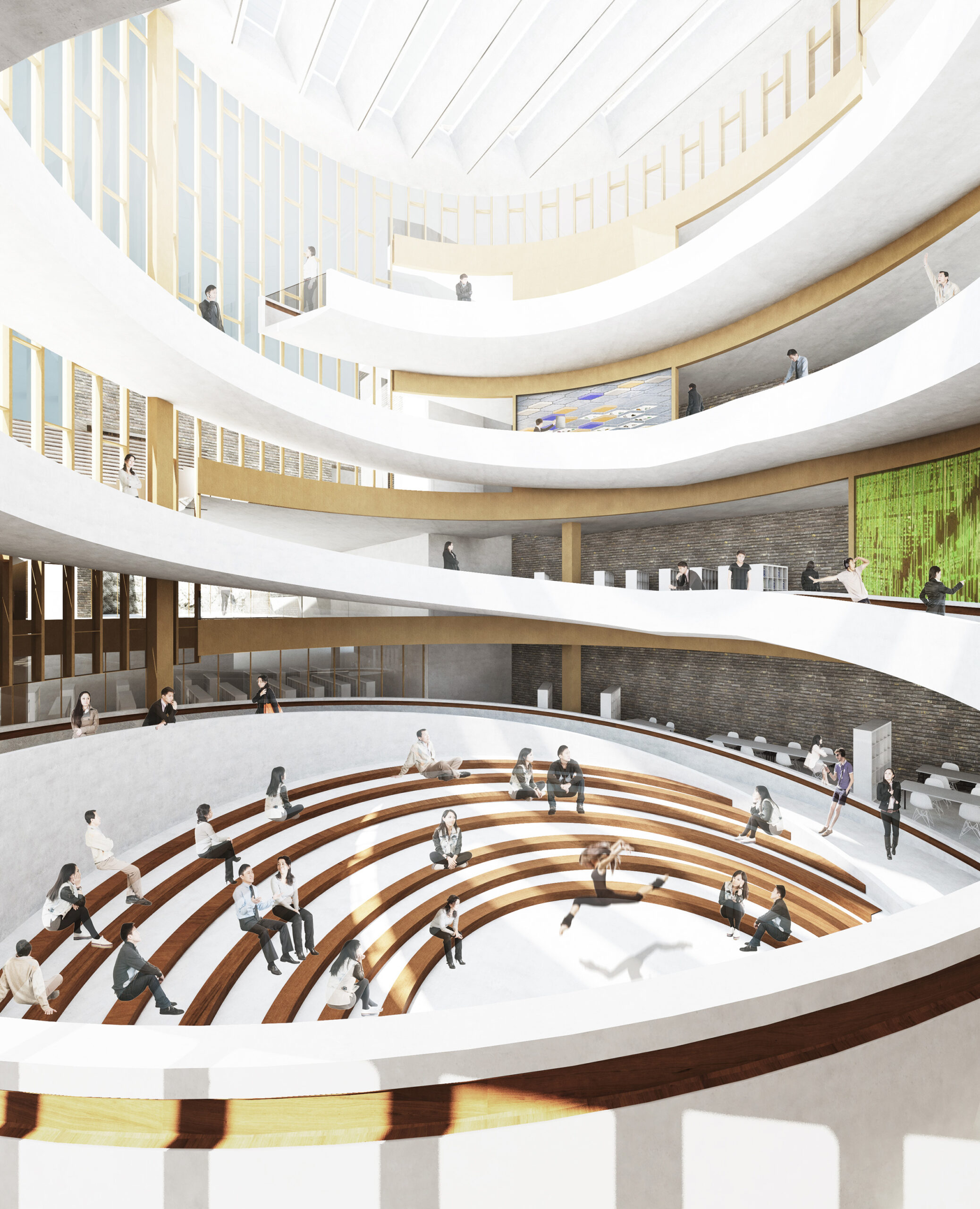
The Open Archive Platform, known as The Void, gathers students, artists, and residents within a large shared volume that reveals the full range of artistic activity. Reading rooms, galleries, and learning spaces project into the void, creating a dynamic mixing ground for artistic, academic, and local communities. An open, communicating stair weaves through the space, connecting multiple floors and encouraging occupants to move vertically through the building on foot.
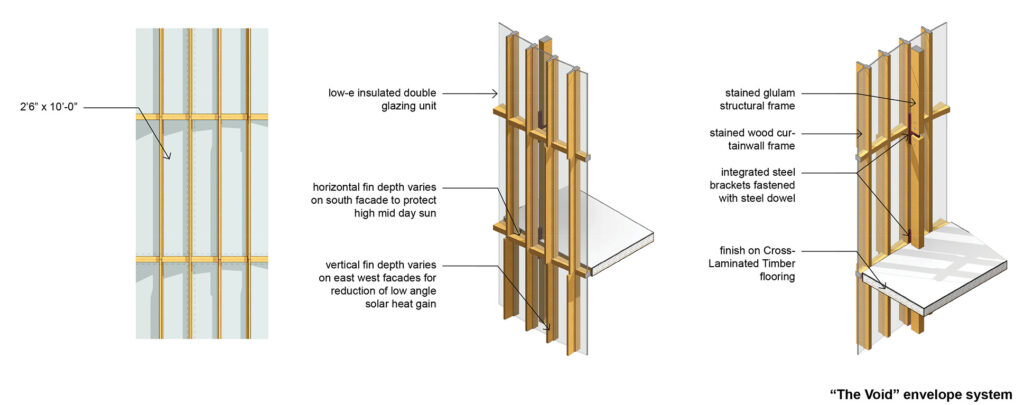
“The Void” Envelope System
A timber-based façade integrating glulam structure, wood curtain wall framing, low-E glazing, and orientation-specific shading fins. The system balances daylight, solar control, and structural clarity while reinforcing material continuity with CLT floor construction.
Sustainability: An Integrated Passive Organism
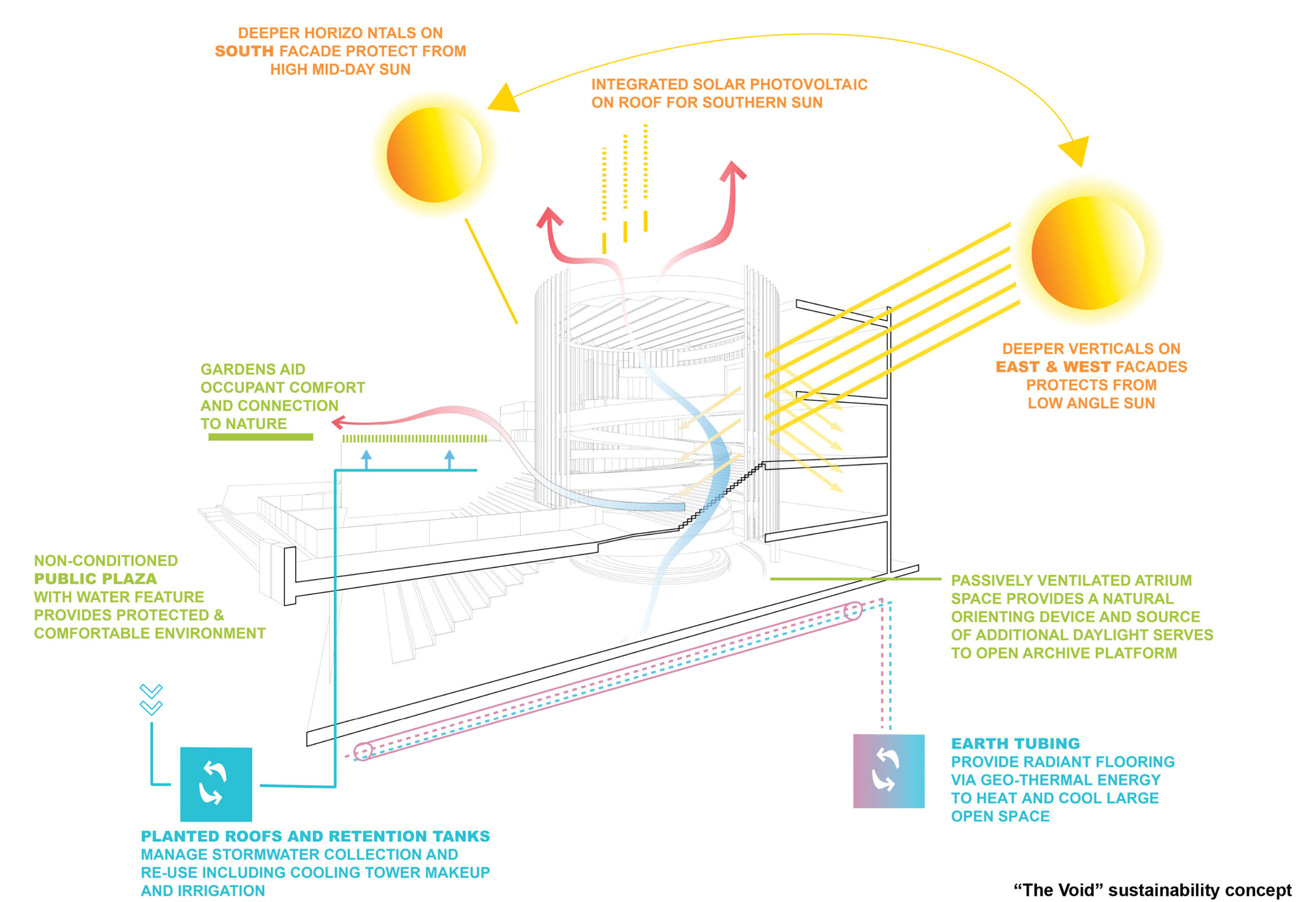
This project responds directly to the site and local climate, integrating architecture and landscape through simple, passive building systems. By leveraging natural forces—light, air, and thermal mass—the design enhances occupant comfort, improves energy efficiency, and minimizes environmental impact. Looking toward the future, key functional areas are strategically organized around the Open Archive Platform, allowing the building to adapt over time and support long-term flexibility.
“The Wall” as a Multivalent Architectural Element
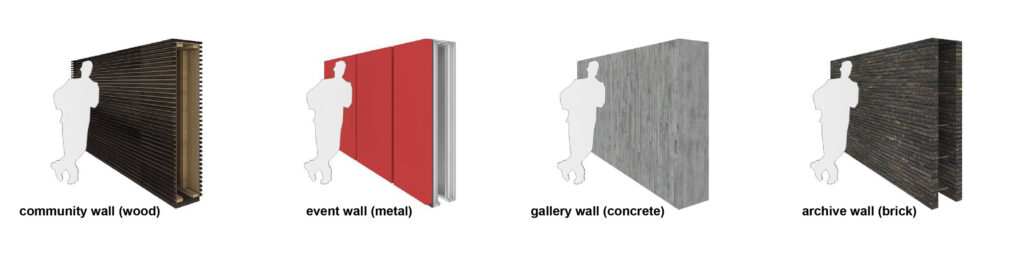
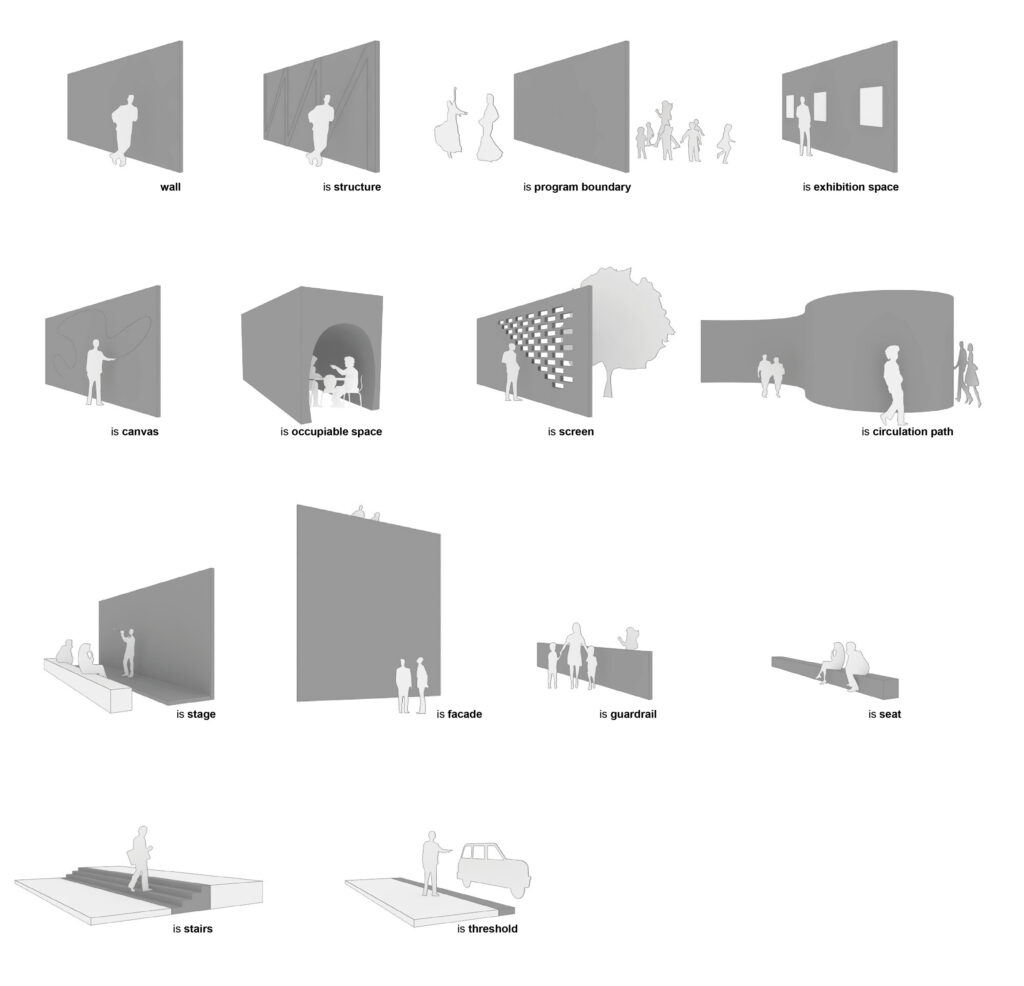
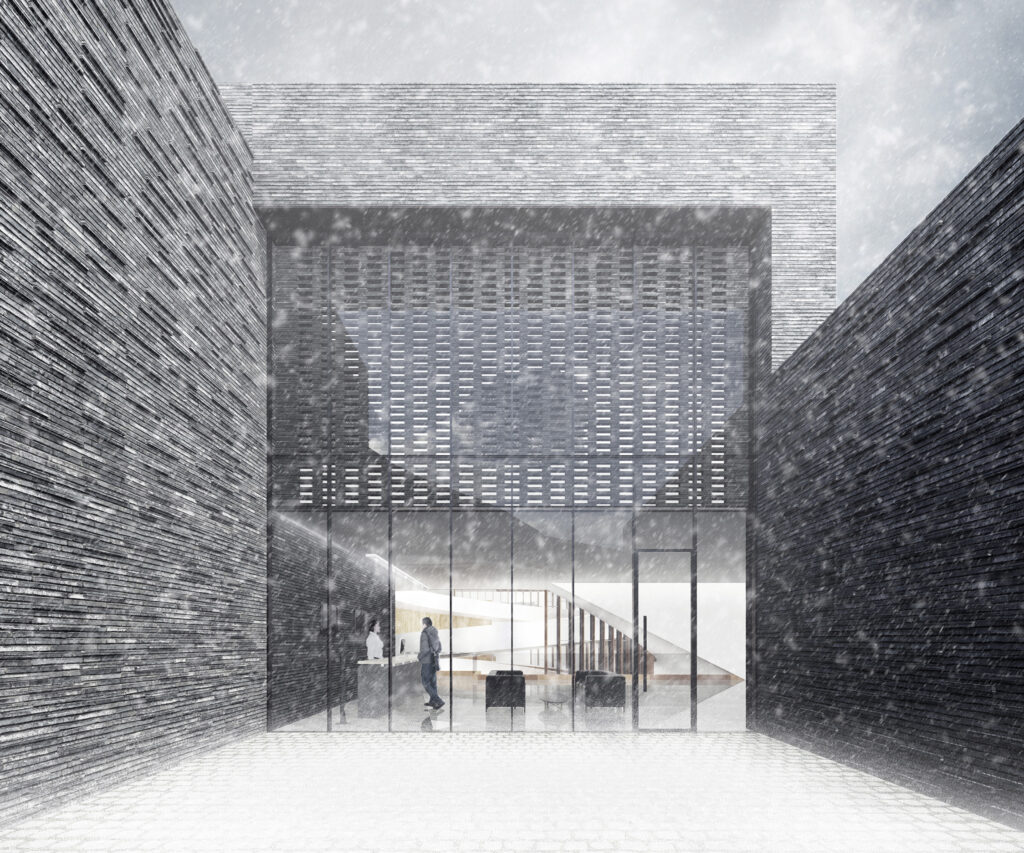
Rather than treating walls as static boundaries, the project reconceives the wall as a multi-functional architectural system capable of assuming diverse roles across spatial, social, and experiential scales.Through variation in thickness, materiality, perforation, and curvature, each wall adapts to its context and use. This layered approach allows the architecture to remain flexible and responsive, encouraging multiple interpretations and modes of occupation over time.